Before you begin, it’s important to know: this activity requires adult supervision and careful attention to safety rules.To protect the work surface, you can cover it with aluminum foil or conduct the experiment on an aluminum tray or baking pan.
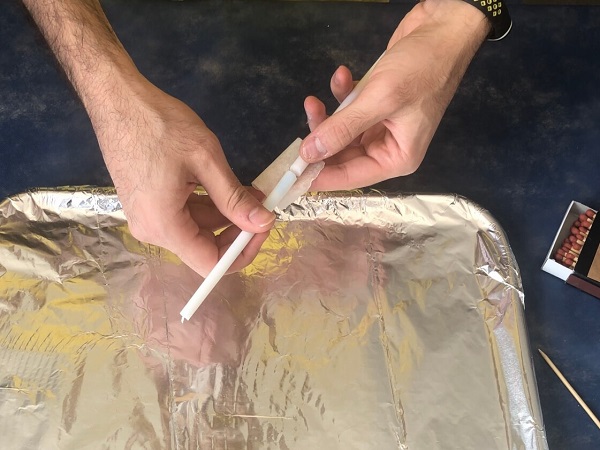
Attach the candles together using tape.Pierce the tape with a toothpick and insert the cotton swab between the two candles.
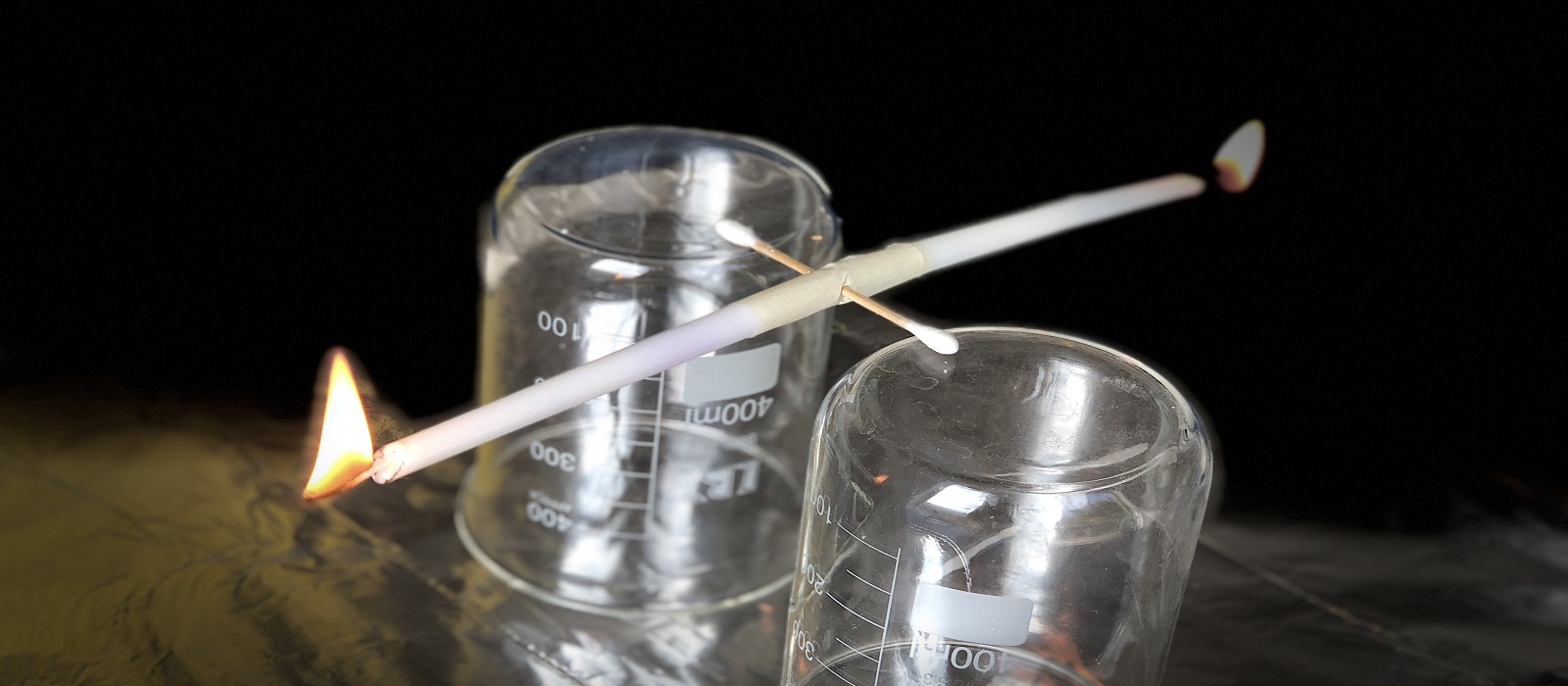
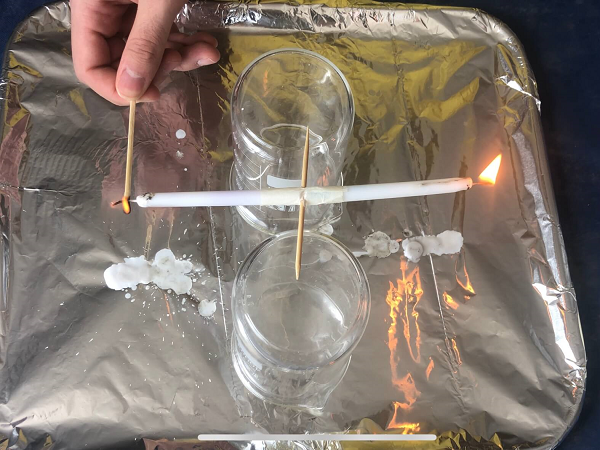
Place the cups upside down on the work surface, about 5 cm apart. Before starting, position the cotton swab across the bottoms of the cups like a bridge, so that the cotton ends of the swab rest on the cups.
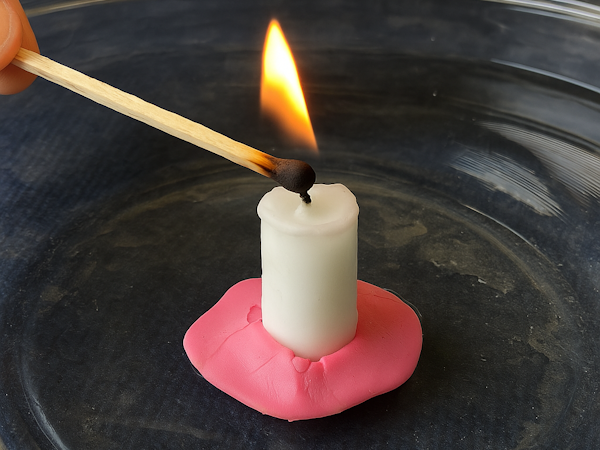
Light the candles and observe what happens.
What’s going on here?
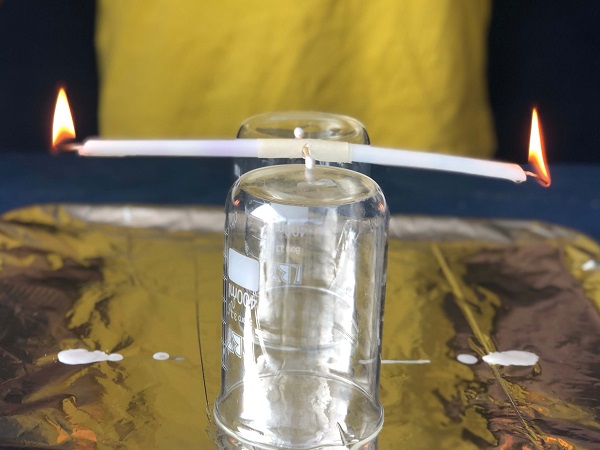
Before lighting the candles, the center of mass is located roughly below the point where the two candles are connected. When the candles are lit, the wax melts. The side where wax melts and drips loses weight, disrupting the balance and causing that side to rise.
The loss of wax on one side creates a relative weight advantage on the other, causing the candle to tilt downward on that side. Since the candles drip alternately, the center of mass shifts from side to side, creating the swinging motion.
Try using a regular toothpick without cotton at the ends. You may notice that the motion is faster. The friction between the cotton and the bottom of the cups slows the movement, making it easier to observe the shifting center of mass.
You can slow it down even more by recording the experiment and watching it in slow motion.