In 2025, the museum’s exhibitions underwent both renewal and expansion, blending traveling exhibitions, locally developed content, and innovative use of outdoor spaces. Over the course of the year, we showcased a variety of engaging exhibitions that highlighted science, technology, and creativity, offering visitors of all ages interactive and playful
experiences that connect knowledge with hands-on discovery.
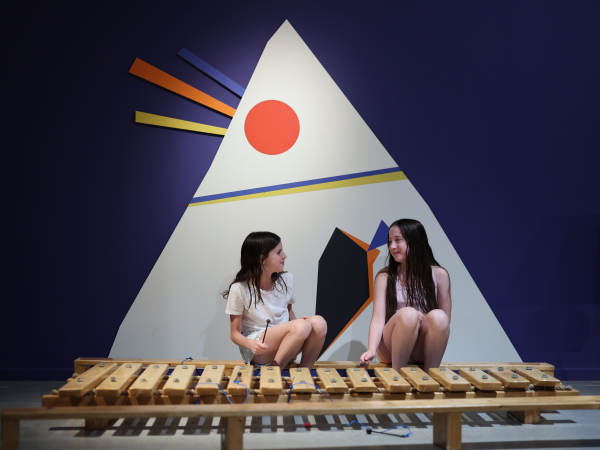
“Tune In” – International Interactive Exhibition
This exhibition, brought from Germany for a year-long presentation, invited visitors on an immersive journey into the worlds of sound, movement, and music. Through interactive displays that seamlessly blend physics, art, and technology, visitors of all ages explored the science and creativity behind auditory experiences. The exhibition attracted particularly strong engagement from families and school groups.
“Water Ways”- Water Exhibition
The “Water Ways” exhibition is part of a five-year cycle, with 2025 marking its second year. Each year the exhibition changes and expands; this year the theme was “Rising and Falling Water”, and featured new displays and demonstrations courtesy of Mekorot, Strauss Water, and Arad Technologies. Presented in the outdoor plaza from July to October, the exhibition offered visitors hands-on activities that demonstrated concepts such as pressure, flow, pumping, lifting, and water transport. The exhibition continues to draw impressive crowds, setting a new record this year with more than 75,000 visitors in July and August alone.
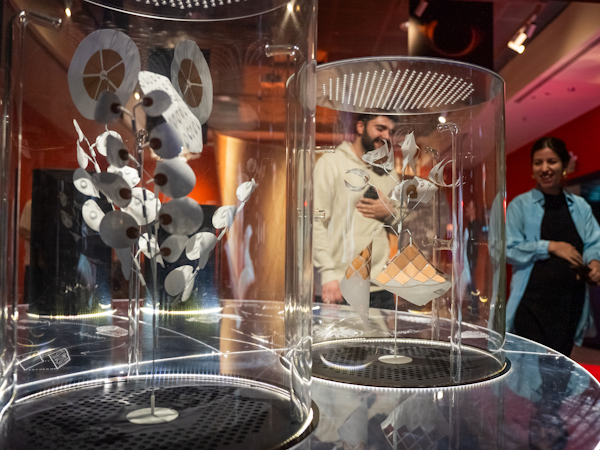
“Automorphia” – Materials That Change Shape
Developed in collaboration with Prof. Eran Sharon of the Hebrew University and Dr. Ariel Blonder of the Technion, and supported by the Hebrew University, the Mandel Foundation, and the Jerusalem Foundation, the exhibition showcased groundbreaking research on materials with self-designing capabilities and demonstrated how geometric design influences form and material behavior.
“Train” – Historical and Educational Exhibit
This authentic train carriage, nearly 100 years old, was donated to the museum by the Jerusalem municipality. Transformed into an open exhibition for visitors, it features dioramas and electric train displays and serves as an engaging educational platform that integrates history, engineering, and science.
The year 2025 was a record year for families and independent visitors, with holiday and summer breaks drawing tens of thousands to the museum for workshops, performances, and special programs. On Passover, the “A Matter of Chemistry” event featured spectacular shows and hands-on creative workshops. In the summer, two major exhibitions, “Tune In” and “Water Ways”, opened, alongside four colorful foam parties that quickly became a major attraction. Over Sukkot, “On the Tracks” provided a historical-scientific experience centered around the new Carriage 322 exhibition. The Mirror Maze, beloved by generations of visitors, was refreshed and expanded into a mini-exhibition.
Throughout the year, the museum participated in major national events such as Space Day, Science Day, Researchers’ Night, and Museum Day, as well as citywide events, including the “Inside Out Festival”, where we opened our makerspace to the public. As part of the “Outline Illustration Festival”, we hosted 19 artists who explored the intersection of sound and imagery in the traveling exhibition “Sound Collage.” Additionally, the museum team created a float for the citywide Adloyada Purim parade.
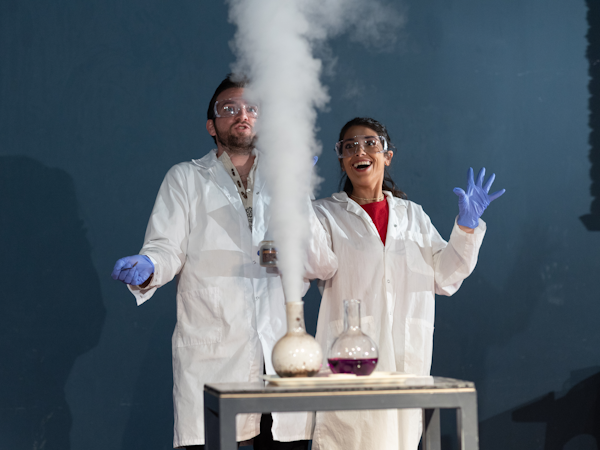
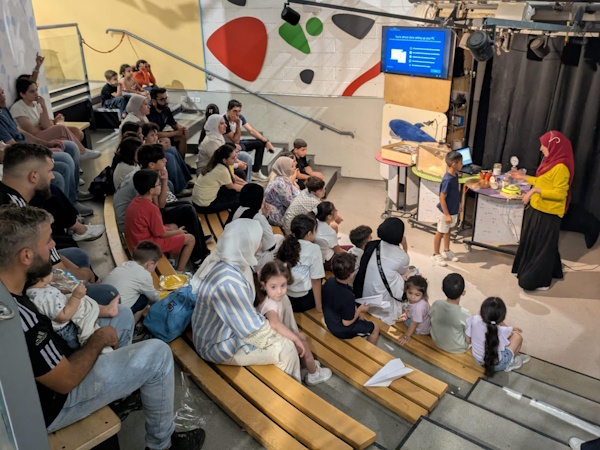
In 2025, the museum developed two original performances for the first time: “What’s All The Noise About?”, a live stage show that explored the relationship between music and physics, and a new chemistry show featuring actors from the Nissan Nativ Acting Studio in Jerusalem. Both productions were highly successful, drawing audiences even for midweek events, and strengthened the museum’s content DNA through a highly cost-effective model. This initiative not only established our capacity for creating original programming but also delivered significant cultural, educational, and economic value.
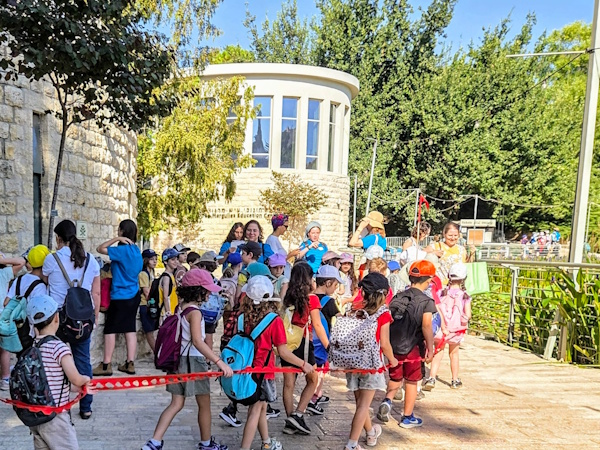
Each year, the museum collaborates with the Hebrew University Botanical Gardens to run a three-week summer camp. This year, we increased the number of groups and more than 100 children from grades 1 through 6 took part.
In 2025, the museum welcomed 60,487 students from across Israel, offering them opportunities for exploration, creativity, and scientific discovery. Among the participants, 23,384 were from the Arab community and 3,645 from the ultra-Orthodox community, underscoring the museum’s commitment to inclusivity and serving all segments of Israeli society. A total of 42,859 students were from Jerusalem schools, participating in a wide variety of activities and municipal initiatives. These figures demonstrate the museum’s role as a central hub for science education in the city and its impact in promoting equal learning opportunities for all.
Key Activities For Students :
For Teachers, Kindergarten Educators, and Educational Teams
Special Programs
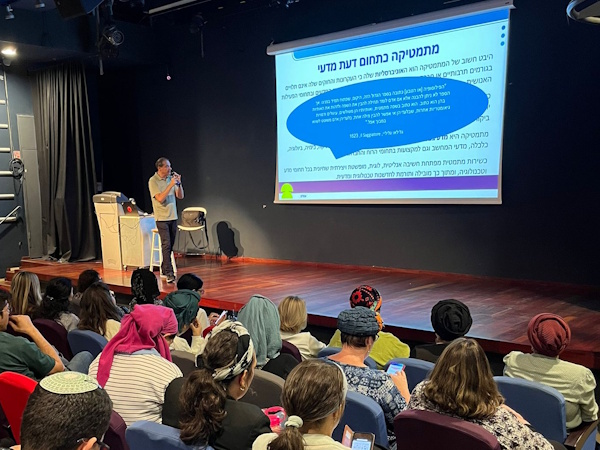
The museum continued to spearhead impactful initiatives in youth enrichment. This year, the Jerusalem Youth Parliament convened for three dynamic days of discussions on the growing influence of AI on everyday life and the future of young people. Approximately 20 high schools from across the city participated; students met with experts and researchers and engaged with the scientific, ethical, and social questions surrounding this rapidly evolving field.
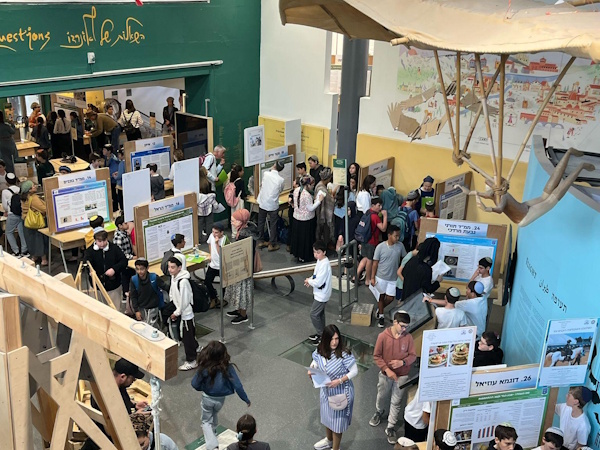
Additionally, the museum continued to lead Israel’s Young Scientists and Developers Competition, a program that has fostered exceptional young talent in science and technology capstone projects for 29 years. This year, the national competition was supported by Israel Aerospace Industries, the Mandel Foundation, the Jerusalem Municipality, and the Jerusalem Foundation.
School-Based Programs
The museum brings its programs directly into schools, offering clubs in physics, makerspace activities, chemistry and materials science, and neuroscience in both Hebrew and Arabic.
The museum also works in conjunction with NGOs and schools to support the development of educational projects in peripheral areas, reflecting its commitment to promoting scientific excellence and increasing opportunities for all students in Israel.
Museum team members are active in numerous professional organizations in Israel and abroad, reflecting our commitment to continuous learning, innovation, and collaboration. The museum is a member of the EUSEA network, where its director serves as Vice President, and of ECSITE, the European network of science centers and museums, where we regularly present at international conferences.
Additionally, the museum’s Director serves on the boards of Jerusalem’s cultural institutions and the Israeli Museum Association, fostering professional dialogue and shaping policy in the fields of museums and science education.
Over the year, we hosted international delegations, participated in the UNBOXING international consortium to develop AI-based educational solutions, and deepened local and national collaborations: a joint club with the Biblical Zoo and Aquarium; a science camp with the University Botanical Gardens; the development of activities with NGOs such as Ofanim and Nitzana; municipal partnerships in programs like “The Jerusalem Advantage”, and more.
All of these efforts reflect our belief that professional collaboration drives creativity, enables the design of an innovative educational future, and amplifies the museum’s impact both in the city of Jerusalem and across Israel.
In 2025, the museum implemented a comprehensive communications, marketing, and public relations strategy. This included digital campaigns for major events, as well as targeted Arabic-language campaigns, developed in collaboration with community leaders, that expanded our outreach to new and diverse audiences.
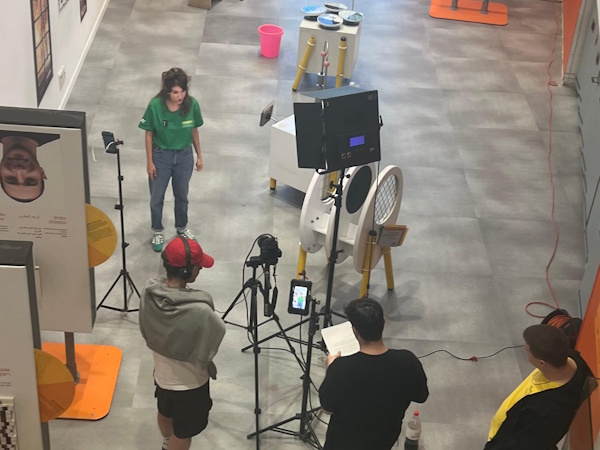
Alongside broad media exposure across multiple platforms, the museum continued to produce engaging science content for the general public on social media. This included experiment videos and live demonstrations, as well as light, accessible takes on current events. Together, these efforts strengthened audience engagement, reinforced the museum’s brand, and drove event attendance.
In addition, the museum established a one-of-a-kind partnership with TikTok to produce dozens of science videos to be featured on the platform’s global STEM feed. This unique initiative- the only partnership of its kind initiated by a museum in Israel- is expected to significantly deepen engagement with young audiences in Israel and around the world.
In 2025, the museum significantly expanded its social impact efforts, deepening its engagement with diverse communities throughout Jerusalem. The “Quiet Hours” program, designed for families of children with disabilities, was once again offered to overwhelming demand, often reaching full capacity with little to no marketing, highlighting its vital role within the community.
The museum continued its partnership with Hapoel Jerusalem Basketball Club, providing tickets to families of children undergoing cancer treatment. This initiative creates moments of joy, shared family experiences, and a respite from the challenges of daily life.
Over the year, the museum expanded its outreach to additional communities across the city, including the Arab and Haredi sectors and residents of peripheral neighborhoods. Educational teams delivered off-site programs at multiple locations throughout Jerusalem, further extending the museum’s impact. Together, these efforts reflect our ongoing commitment to being an accessible, inclusive, and relevant cultural and educational institution for all of Jerusalem’s residents.
The year 2026 promises to be one of significant growth and renewal. We will unveil "Point of View", a unique exhibition by British artist Jonathan Horowitz, providing visitors with an immersive experience at the intersection of art, visual perception, and geometry. Additionally, we will continue to expand our Water exhibition and introduce "Beyond the Sky" a brand new exhibition focused on space exploration.
We will continue to develop programs for the general public and the education system, including interactive experiences related to space, AI, energy, and more. We will strengthen local and international partnerships, expand special event days to reach diverse audiences, and actively work to attract new visitors.
We also anticipate beginning work on the new Nature Wing, a large-scale project that will ultimately double the museum’s area and significantly enhance its educational and cultural impact.
These initiatives will ensure the museum remains at the forefront of innovative, inclusive, and engaging science education throughout 2026 and beyond.